Most of us know our own faces pretty well. Whether we’ve looked in our bathrooms, car mirrors, or taken selfies from our phones, it can be confusing to know what extra information a machine can give us.
Actually, quite a lot! When looking in the mirror, we’re only able to see the surface of our skin, plus we can’t really determine how much sun damage we’ve had, how hydrated our skin is, or how deep our lines are. A 3D skin analysis can give us all of this information. If you’ve been looking into 3D Skin Analysis in Delhi, we’ve put together everything you need to know about what it measures, and what it can’t. Plus, how our dermatologist will use this to create a treatment plan.
Why Your Mirror Only Shows Part of the Picture
Firstly, the lighting. Whilst the warm bathroom light will make your skin look less red and uneven, the bright office light will make your skin look tired and patchy. Whilst we’re not being misled, it does make it difficult to get an accurate reading.
Next, the angle. Mirrors only give you a flat image and can be confusing to determine how deep your lines are around your mouth and if one side of your cheeks is slightly less full.
You see your face every day, so you can miss out on small changes. Pigmentation and pores getting more noticeable over the course of a year won’t really stand out, as you’ll be comparing your skin to yesterday.
Many skin issues are caused from underneath. Sun damage can build up over years.
This is why a 3D skin analysis is great! The skin in Delhi receives a lot of harsh sunlight, dust and pollution throughout the year. There’s often a lot of damage that isn’t visible until it causes dullness, patches or premature lines.
What Happens During Your Skin Analysis?
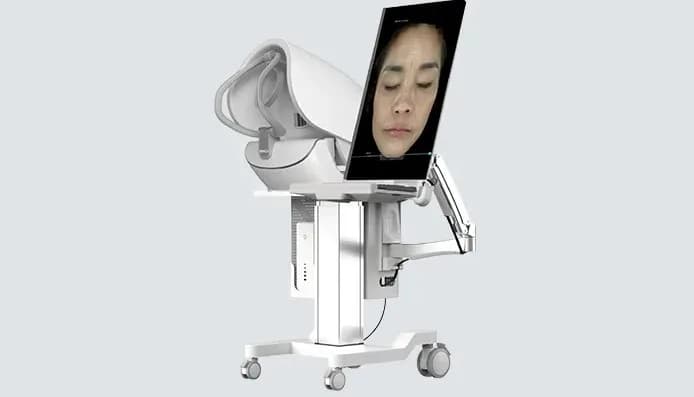
At Twacha Skin, Hair and Laser Clinic,c we offer 3D Skin Analysis in Dwarka, Delhi. We were the first clinic in India to introduce this technology. The scan is done on the ISEMECO 3D D9 Skin Image Analyser.
The analysers take crystal-clear, high-definition images from multiple angles. These are then put together to create a 3D image. The analysers take images of your skin using various types of light. Standard light will show you what you’d normally see. Polarised light will reduce the shine on the surface of your skin, showing you more of the pigmentation and redness underneath. Lastly, UV light will show you any sun damage that hasn’t made it to the surface yet. The images are then analysed using AI-assisted software to give you various measurements of your skin.
As the imaging is non-invasive, there’s nothing to inject or apply. Once the images have been analysed, you’ll have a detailed breakdown with your dermatologist.
What Does a 3D Skin Analysis Show?
Here's what the scan looks at, and how that compares with what your mirror can tell you.
Texture & Tone
Whilst you can determine if your skin is smooth or textured in the mirror, the 3D skin analysis will show you an overall breakdown of your skin. Including any uneven patches.
Pore size and density
You’ve probably noticed the pores on your nose. The analysis will show you the size of your pores and how dense they are in each area. The T-zone and cheeks can often be very different.
Pigmentation & Melanin levels
Whilst you can see any dark patches in the mirror, the analysis will show you the distribution of melanin across your skin. This includes any pale patches that are still developing. This is really important if you suffer from pigmentation or melasma.
UV Damage & Sun Exposure
This is something you will not see in the mirror. The UV imaging will show you any build-up of sun damage years before it causes spots. Many people find this really helpful as they can see why it’s worth wearing sunscreen every day. This is also one of the most surprising results of a skin analysis. As the summers in Delhi are long and bright, you’ll often get more exposure than you think.
Hydration levels
Oily skin can often look well hydrated in the mirror. However, oily skin can still be lacking in hydration. The hydration measurement will help determine this. This will help determine which products and treatments would be suitable for your skin.
Acne-prone areas
Whilst you can see your pimples in the mirror, the analysis will show you which areas are prone to breakouts. This will help target your treatments and daily routine.
Wrinkle Depth & Loss of Elasticity
Whilst you can see lines when smiling or frowning, you won’t be able to see how deep they are or how much elasticity has been lost. This is where the 3D comes in! As the machine creates a 3D image,e it can determine how deep your wrinkles are.
What Does a 3D Skin Analysis Not Do?
There are a few things to note:
It isn’t a diagnosis. Your dermatologist will use the results along with your medical history, lifestyle, current products and medications to determine your diagnosis. Whilst the AI will suggest, it’s the doctor's decision.
It isn’t a medical examination. If you have a changing mole, persistent rash or any skin concern, it should be examined by a doctor.
It’s a snapshot in time. Any changes in your products recently, seasonal changes or a bad week of sleep can affect the results. We recommend doing follow-up scans in similar conditions.
It isn’t a treatment. The scan helps you and your doctor make better decisions. It often saves you time and money on treatments that wouldn’t have been suitable.
How Will It Help Create My Treatment Plan?
2 people can come in saying their skin looks dull and patchy but have very different treatment plans. The skin analysis will help your dermatologist determine the differences. For example:
If you have widespread pigmentation and severe UV damage, sun protection will be a key focus in your treatment plan. Your doctor may also talk to you about treatments like chemical peels or laser treatments, depending on how your pigmentation looks and how your skin is likely to react.
If your skin is oily but lacks hydration, you may focus on hydrating your skin. Using harsh products to control your oil can make oily skin worse. Knowing this early can help you avoid taking the wrong route. Hydrating treatments may be mentioned, such as Hydrafacial or skin boosters.
If your skin has acne-prone areas mapped out, your treatments and daily routine can target these areas.
If the scan shows deeper wrinkles or loss of elasticity, your doctor can determine if treatments like skin boosters, anti-wrinkle injections or HIFU would be worth talking about. Or if a good skincare routine and sun protection would be enough.
Sometimes the most helpful thing a skin analysis can show you is that you don’t need a treatment yet.
Tracking progress over time
Your first scan will be a baseline. Once you’ve had a course of treatments, you’ll have another scan to compare. We also have a special photography room to help track your progress.
This helps you and your doctor see what has changed. Rather than saying "I think it's a bit better," you can see what has changed and decide if you want to continue, adapt or stop.
Who Should Consider Getting a 3D Skin Analysis in Dwarka, Delhi?
Consider getting a scan if any of the below sounds familiar:
● You’re starting a new treatment (peels, lasers, injectables) and want to create a treatment plan based on more than a quick look.
● You’ve invested in serums & creams that haven’t seemed to do much.
● You suffer from pigmentation/melasma that comes and goes.
● You’re in your 20s/30s and want to get ahead of sun damage and premature ageing.
● You’re halfway through a treatment and want to know if it’s working.
How to Get the Most From Your Scan
To get the most from your consultation:
- Make sure your face is clean or allow time to remove your makeup. Makeup & heavy creams can affect the camera.
- Have a list of your products (or photos). Your doctor can advise you on what to continue using, stop using and what may be working against you.
- Write down your concerns. Be as specific as possible. Instead of saying pigmentation, say ‘the patch on my left cheek’.
- Ask a few specific questions. What concerned you the most? What can we leave until later? What should I stop doing? When should we do another scan?
Frequently Asked Questions
Is a 3D skin analysis painful or risky?
No! As it’s an imaging test, there’s nothing to inject, peel or apply. There’s also no downtime. At our clinic in Dwarka, Delhi, you can return to your day straight away.
Do I need to have a 3D skin analysis if I already see a dermatologist?
No, it’s not mandatory. However,r it can give you extra information that you wouldn’t easily get from a regular consultation. Your dermatologist will have measurements of your skin that are hard to determine by eye. For example, le hydration, early signs of UV damage and wrinkle depth. Many people find it most helpful to have it done before starting a new treatment.
How often should I have a 3D skin analysis?
Your dermatologist will advise you on how often to have a scan depending on your treatment. Often, people have it done before starting a treatment and after they’ve finished a course of treatments to see measurable changes. If you’re not having any treatments, it can be a good idea to have it done occasionally to pick up any new sun damage or pigmentation.
Book Your Scan
Whilst your mirror will always be useful, it isn’t designed to show you what’s going on underneath.
If you’ve been guessing what products and treatments to use, a 3D skin analysis in Delhi will give you and your dermatologist a solid base to work from. We’re located in Sector 12A, Dwarka. Book online, call us on +91-93503-03663 or message us on WhatsApp. When booking, mention you’d like a 3D skin analysis. Don’t forget to bring your questions!