You clean the shower drain. You check the wisps of hair on your pillowcase. You remind yourself that you've been taking a biotin supplement every morning for five months, and it's starting to be hard to remember what your hair looked like before.
If this sounds like you, don't worry - you're not alone, and you're not doing it wrong. In fact, you're probably approaching the issue from the wrong angle. The reason most people who are trying to find a good hair drip treatment clinic in Delhi, India ask is "my body lacks something my hair needs, so how can I quickly and honestly replenish those nutrients?" and there are three main answers to that question, none of which are completely satisfactory. This article will helpfully explain each of them in detail so that when you meet the best hair specialist doctor Delhi has to offer, you know which route you want to go down.
A question that is important to answer honestly is: Is it even a nutrient deficiency?
This is the part most blogs skip, and it's the part that saves you money.
Hair fall has several possible drivers. Genetics (androgenetic alopecia). Hormones, including thyroid and PCOS. Stress and post-illness shedding, called telogen effluvium. Scalp infections. Certain medications. And yes, nutritional gaps in iron, vitamin D, B12, zinc and protein.
Nutrients only matter if a gap actually exists. Pouring vitamins into a body that already has enough won't grow hair, no matter how the route is delivered. That's why a proper consultation usually starts with blood work: ferritin, vitamin D, B12, thyroid profile, sometimes a haemogram. A good doctor will look at your scalp too, often under magnification, before recommending anything.
So the honest sequence is: test first, treat second. Any clinic that reverses that order is selling you a package, not a plan.
Once a real gap is confirmed, you have three routes.
Route 1: Oral supplements — the slow, steady lane
This is where nearly everyone begins. A biotin tablet, an iron syrup, a multivitamin from the chemist downstairs.
How it works: you swallow it, your gut absorbs a portion of it, your liver processes it, and whatever survives that journey circulates through your blood. Some of it eventually reaches your hair follicles.
What's good about it: it's affordable, easy, and completely non-invasive. For a mild deficiency in someone with a healthy gut, it genuinely works. Correcting low ferritin with oral iron over a few months can visibly reduce shedding.
Where it falls short: absorption. Your gut doesn't take in everything you swallow. If you have acidity, IBS, low stomach acid, a history of gastric surgery, or you're simply on a poorly absorbed formulation, a large share of that tablet never makes it to your bloodstream. Hair is also low on the body's priority list. Your heart, brain and muscles get served first. Whatever is left over goes to your follicles.
And it's slow. You're typically looking at three to six months before you notice a difference, which is a long time to keep faith when you're still seeing hair on your pillow.
Route 2: Hair drip treatment — the direct bloodstream route
A hair drip, also known as a hair IV drip or IV nutrition, is a procedure involving the introduction of a specially prepared blend of vitamins, minerals, amino acids, and antioxidants into the bloodstream.
The process itself is straightforward: a drip is inserted into a vein and left to slowly drip in a stream of fluids for forty-five to sixty minutes. During this time, a patient may relax, read, or check emails. There is no downtime, and a patient can return to their regular activities as soon as the procedure is done. Usually, a course of three to five treatments every few weeks is required to see a noticeable effect.
What a session feels like: you sit in a chair, a fine cannula goes into your arm, and the drip runs for roughly 45 to 60 minutes. Most people scroll on their phone or take a call. There's no downtime afterwards, and you can drive home and go back to work. Most protocols involve three to five sessions spaced a few weeks apart.
Who it suits: The IV blend usually has biotin, various B-complex vitamins, zinc, vitamin C, and amino acids for keratin production. The best people for this type of intervention are patients with clinically diagnosed shortages and poor absorption, those recovering from illnesses or extreme diets, and those with concomitant symptoms of nail brittleness, dry skin, and fatigue alongside thinning or shedding hair, as these are indicators of internal deficiency. At a hair drip treatment clinic in Delhi, patients are typically assessed for the presence of secondary symptoms before determining if a drip is a suitable option for them.
Where it falls short: In the case of a hair drip, the most notable weakness is in its lack of focus: while a systemic approach may address multiple issues at once and lead to overall body improvement, it is not always necessary for the scalp and hair to receive the same dosage as the rest of the body. In cases of localised thinning, a more targeted approach may be more effective.
Who should skip it: A hair drip is contraindicated in pregnancy or breastfeeding, scalp infections, autoimmune diseases of the scalp, and diabetes, heart and immune disorders, or other chronic conditions requiring a specialist’s confirmation.
Route 3: Hair mesotherapy — the targeted scalp route
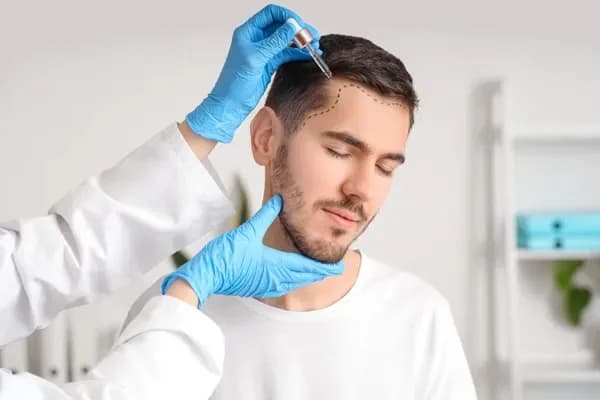
Another method to stimulate hair growth and prevent further loss is mesotherapy. Unlike a systemic approach of traditional IV nutrition, mesotherapy focuses on providing nutrition directly to the site of hair loss in microinjections, avoiding the need for the substance to enter the bloodstream and go through the complex system of digestion and circulation.
How it works: Mesotherapy uses a special tool to deliver a blend of vitamins and minerals, usually in the form of peptides and follicle-stimulating substances, directly to the middle layer of the skin (mesodermis). The injections are placed in proximity to the hair follicles on the scalp to address the localised nutrition deficit and promote neogenesis.
What a session feels like: A typical session takes thirty to forty-five minutes and only requires a local anaesthetic. The discomfort is comparable to a light prick of a needle, and most patients are able to return to their regular activities immediately after the session with no downtime required.
Who it suits: Most often, mesotherapy is recommended for patients presenting with focal thinning, early-stage pattern baldness, or a widening part or temples. It is also an option in cases where the patient’s laboratory tests do not indicate a nutritional deficiency, but they still experience hair loss and follicle miniaturisation as the existing ones are entering the resting and shedding phases prematurely.
Where it falls short: The main limitation of mesotherapy is its localised nature: while it can provide an immediate boost and nutrition to the target area, it does not address the underlying causes of hair loss and does not affect the overall body. It is also unsuitable for most patients with systemic shortages or other conditions, including pregnancy or breastfeeding, active infections, keloid scars, or severe allergies. Due to the nature of the procedure, mesotherapy is not recommended for those uncomfortable with needles.
So what is better, a drip or mesotherapy? Which one is better for hair loss?
Here's the honest answer that a good doctor will give you: often, it's not one of the three. It's a combination, sequenced properly.
A fairly typical plan looks like this. Bloodwork reveals low ferritin and low vitamin D. You start a hair drip course to close the gap quickly, because a tablet would take months. Alongside it, mesotherapy sessions work directly on the thinning zone at your crown. Once your levels come back into range, you move to oral supplements as maintenance, because that's cheaper and more sustainable long term.
Drip fills the tank. Mesotherapy works on the engine. Supplements keep it topped up.
What matters is that someone qualified decides the order based on your reports, your scalp and your history. That's exactly why choosing the best hair specialist doctor Delhi offers matters more than choosing the trendiest treatment name.
What actually makes a clinic worth your time
When you're comparing your options, look past the offers and check these:
● Is a dermatologist, not a technician, doing your assessment? This is non-negotiable.
● Do they run blood tests before recommending a treatment? If nobody asks for your reports, walk away.
● Do they explain what they're not recommending, and why? Honesty about limitations is a good sign.
● Is the drip formulation customised to your deficiency, or is everyone given the same bag?
● Are they clear about timelines? Real results take sessions and weeks, not one visit.
● Is sterility visible? Single-use needles, sealed kits, a clean treatment room.
A clinic that meets all six is a hair drip treatment clinic Delhi residents can trust with something as personal as their hair.
What your first visit should look like
You'll talk through your history: when the shedding started, any illness, weight loss, pregnancy, new medication, family pattern. Your scalp gets examined, often with magnification or a digital analyser. Blood tests are ordered if you haven't done them recently. Then, and only then, you get a plan with a realistic timeline and a clear cost.
You should leave that room understanding why a particular route was chosen for you. If you don't, ask again.
Ready to stop guessing?
If you have been taking supplements for months and have not seen any improvement, the only thing that can help you now is a diagnosis.
At Twacha Skin, Hair & Laser Clinic in Sector 12A, Dwarka, New Delhi, our best Dermatologists in Delhi have been helping patients with their hair and skin issues for more than 17 years now. We first evaluate and understand the problem before recommending any treatment; we also know what does not work and advise you accordingly. We do not follow the package approach; our sessions are designed according to the reports.
Book your consultation today. +91-93503-03663 contact@twacha.in Book an Appointment
Frequently Asked Questions
1. Can I go for oral supplements along with a hair drip?
In many ways, yes, but you need to be extremely careful about the dosages suggested by your dermatologist. Fat-soluble vitamins like A, D, E, and K, when supplemented in higher doses, can lead to toxicity in the body. You must inform your prescribing doctor about all the supplements you are taking, including the ones you buy online. This is the only point where a combined approach of oral and topical supplements can be harmful, so make sure you leave no stones unturned.
2. How many sessions will it take to see any result?
You will see a difference in terms of improved hair density and less frizziness and split ends post each session, but the actual outcome will be visible only after a few months. Hair grows approximately a centimetre a month, and the follicles need some time to respond to the treatment; hence, for visibly thicker hair, you need to wait for at least two to three months. Remember, everyone’s body behaves differently, and a responsible clinic will never assure you of any quick results.
3. Is a hair drip painful, and do I need to take time off?
It's a single needle prick to place the cannula, similar to giving a blood sample. After that, you just sit comfortably for 45 to 60 minutes. There's no downtime, so you can head straight back to work or your day. Some people notice mild redness or tenderness at the site, which usually settles quickly.
Disclaimer: The information provided in this article is for educational purposes only. It is not intended as medical advice. Individual results may vary. Please consult a licensed dermatologist to determine which treatment is best suited for your needs.