There's a specific kind of frustration that sets in when you've done everything right — you're drinking enough water, you've got a three-step skincare routine, you're sleeping reasonably well — and your skin still looks tired.
Not broken. Not full of acne. Just... flat. Dull. Like it's lost something it used to have.
If that sounds familiar, you're not imagining it. Most people in this situation start Googling for the best dermatologist near me, because somewhere along the way they've realised that no serum off a shelf is going to fix what's happening underneath. And they're right — because what they're often dealing with isn't a surface problem. It's a cellular one.
That's where a treatment called Polydeoxyribonucleotide — or PDRN — comes in. And the more you understand about how it works, the more sense it makes as an answer to skin concerns that conventional skincare simply can't reach.
That name sounds like a chemistry class. Let's Break It Down Simply.
PDRN (Polydeoxyribonucleotide) is, at its core, a DNA fragment. Specifically, it's derived from highly purified salmon DNA — a detail that tends to raise eyebrows, but the science behind it is genuinely interesting and worth understanding.
The DNA structure of salmon sperm cells has an unusually high degree of compatibility with human skin cells. When PDRN is introduced into the skin, the body doesn't treat it as a foreign substance. Instead, it absorbs it and uses it as a building block to support cell regeneration and repair.
PDRN works by activating something called the A2A adenosine receptor pathway in your skin cells. That sounds complex, but what it means in practice is this: PDRN switches on your skin's own repair system. It prompts cells to regenerate faster, stimulates collagen production, and reduces inflammation — all from within.
Think of it like giving your skin the raw materials it has quietly been running low on, and watching what happens when it finally has enough to work with.
Why Delhi Skin Specifically Needs This Kind of Treatment
PDRN isn't new — it's been used in clinical medicine for decades, particularly in wound healing, burn treatment, and post-surgical recovery. What's changed is that the best dermatologists in Delhi and across India have started applying the same regenerative science to everyday aesthetic skin concerns, with consistently strong results.
Unlike trendy skincare ingredients that work primarily at the surface, PDRN operates at the cellular level. It doesn't just moisturise the outer layer — it supports the actual biology underneath that keeps skin looking firm, healthy, and evenly toned.
This matters especially in Delhi. The city's combination of intense UV exposure, high pollution, dry winters, and humid summers creates a cumulative skin burden that most people underestimate. By the time the damage becomes visible — as pigmentation, dullness, or premature ageing — it's been building up for years beneath the surface. A good dermatologist in Delhi will tell you that treating it at the surface alone is fighting the battle on the wrong front.
What PDRN Fixes?
Here’s when things start to matter in real life. Because PDRN treatments handle problems that are usually ignored by standard methods.
● Dull, Flat Skin: Most days, skin just sits there - no glow, even when you treat it right. That happens as new cells pop up more slowly, while support fibres fade out. With PDRN, those processes kick back up, quietly syncing behind the scenes. People start noticing a shift after several visits, like their face has finally caught some rest.
● Pigmentation and Uneven Skin Tone: Pigmentation issues sometimes fade better when melanin production slows down - here, PDRN steps in gently. Sun-exposed patches find balance as healing kicks into gear behind the scenes. Creams might miss spots; chemical peels can plateau - yet layering in PDRN changes what happens next. When past routines fall short, certain skin experts in Delhi turn to this option without hesitation. Tough discolouration? That's exactly where it tends to matter most.
● Dry and Dehydrated Skin: Moisture on the surface? That comes from outside help. When it slips away fast, the real issue might be underneath. Hold happens deeper when the skin rebuilds its grip from inside. Think long days without tightness. Relief shows up slower - yet sticks around much longer. Top layers get a boost, sure, but repair kicks in beneath. Lasting change isn’t just about what sits on your face.
● Acne Scars and Skin Texture: PDRN works right where scars have changed how skin feels, nudging collagen into those spots slowly. Over weeks, the surface begins to smooth out - no sudden shifts, just quiet progress underneath. Healing shows up differently here: not loud, but steady.
● Fine Lines and Early Signs of Ageing: Smoothness fades a little here and there when skin loses its bounce. PDRN steps in not by plumping creases like fillers do, but by reinforcing nearby tissue so it holds up better. Elasticity climbs, collagen thickens - changes that quietly soften shallow wrinkles. Strength returns beneath the surface, letting skin handle stress without showing every mark.
● Dark Circles Under the Eyes: Under the eyes, dark patches often come from weak blood flow, skin tone shifts, or shrinking tissue. Not every treatment touches each of these, but PDRN does. When applied carefully by an experienced skin specialist in Delhi, it stands out quietly among available choices simply because it works on all angles at once. Length stays firm even as the approach adapts.
● Darkened Lips: PDRN injections have shown good results for lip darkening caused by sun exposure, lifestyle factors, or skin conditions — a concern many patients have but don't always know has a proper clinical solution.
How the Best Dermatologist in Delhi Approaches PDRN Treatment: The Nucleoskin Protocol
At Twacha Skin Clinic in Dwarka, New Delhi — consistently ranked among the best dermatology clinics in Delhi — the PDRN treatment is delivered through a formulated protocol called Nucleoskin. It combines three clinically active ingredients into a single, targeted treatment:
● PDRN — for cellular regeneration and repair.
● Hyaluronic Acid — a molecule the skin naturally produces, which draws and holds moisture in the deeper layers. Here, it's working at a hydration and structural support level — not as a filler.
● Glutathione — a powerful antioxidant that depletes with age, stress, and environmental exposure. In the skin, it plays an active role in brightening and protecting against oxidative damage.
The combination matters. PDRN does the repair work. Hyaluronic acid restores the moisture environment that skin cells need to function well. Glutathione addresses the pigmentation and brightness component. Together, they target skin dullness, damage, and ageing from three complementary directions at once — which is why results are more noticeable than treatments addressing just one pathway at a time.
What the Treatment Actually Feels Like
People are often more apprehensive about the word "injections" than the experience warrants. Here's what to realistically expect:
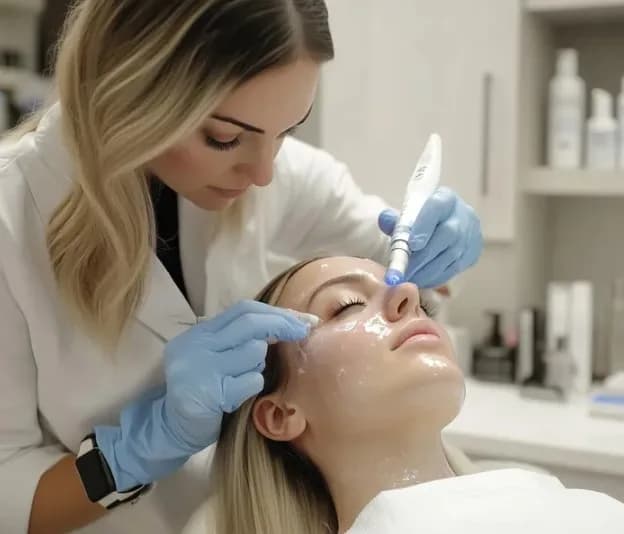
The treatment involves micro-injections of the Nucleoskin solution — tiny amounts, precisely targeted. A topical numbing cream is applied beforehand, and most patients describe the sensation as mild. The session takes around 30 to 45 minutes.
Immediately after, you might notice light redness or mild swelling — a normal response that settles within 24 to 48 hours. No recovery period disrupts your routine, and most people resume normal activity the same day.
Improvements in texture and hydration typically become visible after the second or third session. The longer-term changes — improved collagen density, reduced pigmentation, better elasticity — continue developing over the weeks following each session. Most patients benefit from three to five sessions, spaced a few weeks apart, with the exact plan recommended by your dermatologist based on your specific concerns.
Is This Treatment Right for You?
The best dermatologist in Delhi will tell you that PDRN isn't for everyone — but it is appropriate for a wider range of patients than most people realise:
● Anyone whose skin looks dull or tired despite a consistent skincare routine, where topical products have genuinely stopped making a difference.
● People dealing with pigmentation, melasma, or uneven skin tone that hasn't fully resolved with creams, peels, or lighter treatments.
● Those in their 30s and 40s noticing early signs of ageing — less firmness, deepening fine lines, a shift in overall skin quality — but who aren't ready for or interested in more invasive procedures.
● Patients with sun-damaged skin, which is especially common in Delhi, given the year-round UV intensity. The cumulative damage often appears suddenly in the late 30s, and PDRN is well-suited to addressing it before it compounds further.
● Anyone bothered by persistent dark circles or lip darkening who hasn't found a satisfying solution through conventional means.
The treatment is generally not recommended during pregnancy or breastfeeding, or for those with active skin infections or certain medical conditions. A proper consultation with a qualified dermatologist is the only reliable way to know whether it's the right fit for you.
Why the Right Dermatologist in Delhi Makes All the Difference
PDRN is a treatment that works well when administered correctly. The depth, placement, and dosage of the injections make a real difference to both safety and outcome — and it should be part of a broader skin plan, not a standalone procedure without context.
At Twacha, the approach has always been consultation-first. Before any injectable treatment is planned, your dermatologist reviews your full skin picture — your concerns, history, and, increasingly, the data from a 3D skin analysis — and builds a protocol around what your skin actually needs. The plan you receive is calibrated specifically to you, not adapted from a generic template.
This matters more than the treatment name itself. The same ingredient can produce very different results depending on how carefully it is used, and by whom. If you're searching for the best dermatologist in Delhi for a treatment like PDRN, clinical precision and a consultation-led approach aren't optional — they're what determine whether the treatment delivers.
Twacha Skin Clinic was founded iDr007 by Dr Tapesh. Dr Manish and Dr Richa Sharma have been ranked among the top skin and hair clinics in Delhi NCR six consecutive times in the Times Health Survey between 2018 and 2024. That kind of track record, over that length of time, reflects a consistent standard of clinical care — which is ultimately what every patient is looking for.
The Bottom Line
Your skin's ability to repair, renew, and stay healthy isn't just a surface question. If what you've tried at the surface level hasn't delivered the results you hoped for, it may be because the repair processes underneath are what actually need support.
Polydeoxyribonucleotide isn't a buzzword. It's a clinically studied ingredient with a clear, well-understood mechanism of action — and in the hands of the best dermatologist in Delhi, it can produce genuine, lasting improvements in exactly the kind of skin concerns that most products simply can't touch.
If you're ready for a proper, honest conversation about what your skin needs — not a generic prescription, but a plan built around your actual skin — Twacha Skin Clinic in Dwarka, New Delhi, is where that conversation starts.
Book your consultation at Twacha Skin Clinic, Sector 12A, Dwarka, New Delhi. Call: +91-93503-03663 Visit: twachaclinic.com Book an Appointment Online
FAQs About PDRN Skin Rejuvenation Treatment
1. PDRN comes from salmon DNA — does that make it unsafe for people with fish allergies?
This is one of the most common and entirely reasonable concerns patients raise. PDRN is derived from salmon sperm cells, but it undergoes extensive purification before clinical use. The final product is highly purified DNA — it doesn't contain fish proteins, which are what typically trigger fish or seafood allergies. That said, if you have known sensitivities, always discuss this with your dermatologist in Delhi before proceeding. They may want to do a patch test or take additional precautions based on your history.
2. How is PDRN different from other injectables like skin boosters or dermal fillers?
They work in fundamentally different ways. Dermal fillers add physical volume to areas that have lost it — they're structural. Skin boosters like Profhilo are primarily hyaluronic acid-based and focus on hydration and skin quality. PDRN targets cellular repair and regeneration — working at the level of your skin's own biology. Many patients benefit from combining treatments, but they serve different purposes. The best dermatologist in Delhi will advise on what combination is appropriate for your specific skin concerns, rather than applying a one-size-fits-all approach.
3. Are the results permanent, or will they fade after a while?
PDRN stimulates your skin's natural processes — collagen production, cell turnover, tissue repair. These are real, ongoing biological activities, not a surface coating, so the improvements are genuine and cumulative. However, your skin continues to age and is affected by ongoing factors like sun exposure and lifestyle. Most patients find improvements last well, and periodic maintenance sessions — typically once or twice a year — help sustain results. Think of it less as a one-time fix and more as a regular investment in your skin's long-term health.
4. Can PDRN be combined with other treatments at Twacha?
Yes, and it frequently is. A dermatologist in Delhi, like those at Twacha ,will often combine PDRN with chemical peels for pigmentation, laser treatments, or HydraFacials as part of a wider protocol. It's also used alongside Twacha's ISEMECO 3D D9 Skin Analyzer results, which allow the dermatologist to map precisely where the skin needs the most repair and track how it responds over time. The specific combination is always decided during your consultation, based on what your skin data and concerns indicate.
5. There are PDRN serums sold online. Are those the same as the clinic treatment?
Not really. PDRN works by interacting with receptors inside the skin cell — which requires it to actually reach those cells. Topical PDRN products face a significant absorption barrier; most of the molecule doesn't penetrate deeply enough to trigger the cellular activity that makes PDRN clinically effective. The strong results that have made PDRN credible in dermatology are based on injectable administration by qualified medical professionals. If you're considering PDRN because of what the clinical evidence shows, an injectable treatment with the best dermatologist in Delhi — not an over-the-counter serum — is the version that delivers on that promise.