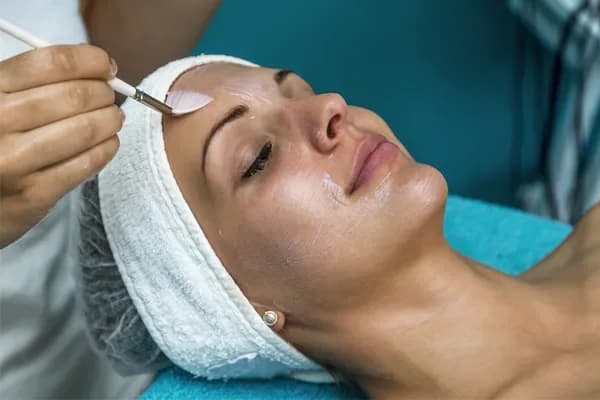
Most often, when somebody books a chemical peel treatment in Delhi, the first concern that they have is – how much will my skin flake off?
Wrong question. Actually, it is a really interesting question in the wrong context. And the reason why it is wrong is that the flaking is just a side-effect, caused by a process deeper in the skin, which you cannot see. So, that’s what happens to your skin during a chemical peel.
So let's go down through them, one at a time. By the end of this, you'll understand your own skin better than most people who've already had three peels.
You see, your skin is made of many thin layers.
To explain it to you, imagine that your skin is like an onion – consisting of many thin layers, with different properties and functions. Let’s start from the top and go downwards.
First comes the top layer – also known as stratum corneum. It comprises dead cells and is about 0,5 mm thick. This is the part that will eventually peel off during a chemical exfoliation facial. The stratum corneum is dead, which means that its only purpose is to protect the layers underneath. The most common concerns, such as dullness, roughness, uneven texture and comedones, are caused precisely by this layer.
Then comes the rest of your epidermis – the topmost part of your skin. It generates new cells and is home to your melanocytes – cells that dictate your skin colour and produce melanin. This is why this layer takes part in melasma, pigmentation irregularities such as lentigines and your tan.
The papillary dermis is next, and this is where things get structural. Collagen. Elastin. Blood vessels. This is the layer that determines whether your skin looks plump or tired.
The reticular dermis is the deepest layer — thick, dense collagen. Deep scars and deep wrinkles are anchored here.
A chemical peel is simply a controlled injury to one of these layers. Which layer it reaches is the only thing that separates a lunch-hour glow treatment from a serious medical procedure.
Superficial peels: the stratum corneum, and just a little below
This is where most people should start, and where most chemical peel treatment in Delhi actually happens.
A superficial peel uses acids like glycolic, salicylic, or mandelic at concentrations that dissolve the "glue" holding dead cells together in the stratum corneum. That's it. The acid doesn't scrape or burn anything living — it breaks the bonds between cells that were already dead and overdue to leave.
What's fascinating is how differently these acids behave, and why your dermatologist picks one over another:
● Glycolic acid has the smallest molecule of the common peeling acids, so it penetrates fast and evenly. Great for dullness and texture. Can sting more.
● Salicylic acid is oil-loving, which means it travels into the pore lining rather than just across the surface. That's why it's the go-to for acne and blackheads.
● Mandelic acid has a large molecule, so it moves slowly and gently. It's often preferred for Indian and deeper skin tones, where a slow, even penetration reduces the risk of the skin reacting with more pigment.
That last point matters more in Delhi than people realise. Our skin type, combined with our sun exposure and pollution levels, means aggressive is rarely better. Slow and correct beats fast and dramatic.
What you feel: a tingle or mild burn for a few minutes. What you see afterwards: often nothing much for two days, then some light flaking around the nose and chin. Sometimes not even that.
Medium peels: down into the epidermis and papillary dermis
Here the target changes completely. A medium peel — typically TCA (trichloroacetic acid), sometimes a layered combination — is designed to reach past the dead layer and into living tissue.
This is deliberate. When you injure the papillary dermis in a controlled way, the skin does something remarkable: it treats the injury as a signal to rebuild. Fibroblasts activate. New collagen gets laid down over the following weeks. Pigment-producing cells get disrupted and reorganised, which is how stubborn sun damage and pigmentation actually clear.
The improvement you see at week six from a medium peel isn't the old skin coming off. It's new skin being built underneath.
And this is where "frosting" comes in.
If you've seen a video of someone's face turning chalky white mid-peel and found it slightly alarming — here's what's actually going on.
Frosting is protein coagulation. TCA denatures the keratin proteins in your skin, and denatured protein turns opaque white. It's the same basic chemistry as an egg white turning from clear to white in a pan.
For a dermatologist, frosting is not a side effect. It's a depth gauge — one of the few real-time visual signals of how far the acid has travelled:
● Level 1: patchy, light speckled white — the acid has reached the epidermis
● Level 2: even white frost with pink showing through — papillary dermis
● Level 3: solid, dense white with no pink — reticular dermis
An experienced practitioner is watching for a specific level, then neutralising or stopping at exactly that point. This is precisely why depth-based peels should never be attempted at home or at a salon. There is no way to read frosting correctly without training, and by the time an untrained eye notices something is wrong, the acid has already gone deeper than intended.
Deep peels: the reticular dermis
Deep peels, usually phenol-based, reach the deepest collagen layer. The results can be significant for severe wrinkling and pronounced sun damage — but this is a genuine medical procedure with real recovery time, real risk, and a narrow set of suitable candidates. Phenol can affect heart rhythm and requires monitoring during the procedure.
Deep peels are rarely the right first answer, and any honest clinic will tell you so.
So why isn't peeling the goal?
Now the payoff.
Visible flaking happens when a lot of dead cells detach at once and lift off in sheets rather than shedding individually. How much you flake depends on your skin's thickness, hydration, oil levels, and how much dead cell buildup you were carrying that day.
None of those things measures whether the peel worked.
Two people can have the identical peel, at identical strength, from the same dermatologist. One sheds visibly for four days. The other barely flakes at all. Both can end up with the same improvement in tone and texture, because the improvement comes from accelerated cell turnover and collagen response — processes that continue for weeks after the flaking stops.
Chasing visible peeling is how people end up requesting stronger concentrations than their skin needs, and how post-inflammatory hyperpigmentation happens — the dark patches that appear after an overly aggressive treatment on skin that wasn't ready for it.
The right measure of a good peel is what your skin looks like at week four. Not week one.
What this means for your next appointment
You now know more than enough to ask better questions. When you go in for a consultation, ask which layer the peel is targeting, which acid is being used and why it was chosen for your skin type, and what your dermatologist expects your skin to look like at day three versus week four.
A good clinic will answer all three without hesitating. At Twacha Skin Clinic in Dwarka, every peel starts with a skin assessment before any acid is chosen — the same principle the team applies across dermatology and trichology, whether someone is here for a peel or searching for the best hair specialist doctor Delhi has for a hair fall concern. The assessment comes first. The protocol follows from it.
If your skin has been sitting in the "I should probably do something about this" category for a while, a consultation costs you an hour and tells you exactly where you stand.
Book a consultation at Twacha Skin Clinic, Sector 12A, Dwarka — call +91-93503-03663 or book online.
Frequently Asked Questions
1. If my skin doesn't peel, did the chemical peel treatment fail?
No. Visible flaking depends on your skin's thickness, oil levels, hydration, and how much dead cell buildup you had that day — not on whether the acid did its job. Superficial peels frequently produce little to no visible shedding while still improving tone and texture over the following weeks. Judge the result at week four, not week one.
2. How do I know which depth of peel my skin actually needs?
That's decided by your concern, not your preference. Dullness, mild congestion, and rough texture respond to superficial peels. Sun damage, uneven pigmentation, and acne scarring usually need medium-depth work. Deep peels are reserved for severe wrinkling and are unsuitable for most people. A proper skin assessment before treatment is what makes this call — which is why any chemical peel treatment in Delhi should begin with a consultation, not a menu.
3. Are chemical peels safe for Indian skin tones?
Yes, when the acid and depth are matched to your skin type. Deeper skin tones carry a higher risk of post-inflammatory hyperpigmentation, which is why gentler, slower-penetrating acids like mandelic acid are often preferred, and why a graded series of milder sessions usually beats one aggressive treatment. Skill in choosing the depth matters far more than the strength of the peel itself.